Laudato si' has received copious attention from theologians in the wake of its publication—as was to be expected of a teaching document of the highest level. However, as a university educator at a Catholic university in France, my work consists in introducing audiences of eighteen-somethings to the subject of climate instability. From this vantage point, the part of Laudato Si’ which I have revisited most often consists of §§209-215 (titled “Educating for the Covenant Between Humanity and the Environment”). I wrote this essay with the intention to share some of the conversations I have had with that text, as I have turned toward it repeatedly for inspiration, trying to bring my pedagogy into resonance with the delicate perimeter that the Holy Father manages to lay out, not just for Catholic educators, but for all people of good will.
Pope Francis packs a punch in just a few short paragraphs. The focus of the section is clear from the get-go: “An awareness of the gravity of today’s cultural and ecological crisis must be translated into new habits” (§209, italics added). I approach the reference to “habits” as a cue to virtue ethics. New habits are not purely the product of individual will, but they thrive through inscription in a community. Community nurtures virtue through the variety of examples it is able to provide—both more and less successful—for grasping the dignity and the finitude of our ethical quests.
Laudato Si’ recognizes that our starting point in the developed world today is not ideal, since consumeristic habits are often those that set the baseline. Hence, our ethical discernment is enfeebled by a lack of examples that are both virtuous and realistic. This poverty of examples is a challenge for the Christian more generally: the more rarefied our examples of virtue become, the more we become vulnerable to unattainable ideals or to escapist fantasies that breed paralysis in different ways. The climate conversation, in this sense, strikes as just one instance where this poverty of examples breeds such a sense of paralysis or denial.
After reviewing different forms that “environmental education” may take (§210), Pope Francis concludes in §211: “[T]his education, aimed at creating an ‘ecological citizenship,’ is at times limited to providing information, and fails to instill good habits.” It is that same poverty again: purely cognitive programs for “spreading awareness” of the growing instability of our planet risk to remain centred on the individual.[1] However, a sum of knowledgeable people does not a community make.
In his conclusion, the Holy Father names a central paradox of many a contemporary educational endeavor. The latest example of the paradox, and the one I am most familiar with, is the compulsory curriculum on “Ecological Transition and Sustainable Development” that has been made compulsory by the French Ministry of Higher Education and Research for all undergraduate degree programs in France.[2] This is a curriculum that is largely based on the work of the Intergovernmental Panel on Climate Change (IPCC). Such curriculum, which covers the basics of the climate question today (anthropogenic perturbation of Earth system processes, loss of biodiversity, the “real cost” of energy supply and unequal effects of planetary instability across segments of the population both within and between countries), is particularly attentive to the scientific validation of information. As a matter of fact, the current ecological crisis has required extraordinary efforts on the part of scientists to come up with objective measures for a phenomenon that is not easily observable (like the famous threshold of 2 degrees Celsius relative to the pre-industrial era included in the Paris Climate Agreement).[3]
However, the requirements of scientific discourse (i.e. the attainment of objective criteria and measurements to account for a scale of change so large as to easily withdraw from view) are not entirely coincident with those of educational practice. Education is more than the transmission of objective information. It is a process that addresses itself to a person, whom it strives to cultivate as a subject capable of ethical deliberation and initiative. I believe that Pope Francis is building up to some version of this when he writes that the “information dump” falls short of the promise of education, precisely because it leaves the formation of new habits (which, as I have mentioned, requires realistic examples for building up ethical discernment) entirely unaddressed.
What model of ecological education might address these shortcomings, then? In §213, the Holy Father gives a hint: “Ecological education can take place in a variety of settings: at school, in families, in the media, in catechesis and elsewhere.” What is primary for the cultivation of new habits is the presence of a community. Moreover, this community need not be purely “epistemic” (i.e. based on the knowledge of certain facts), but its function is to incubate useful examples to extend the sense of the “adjacent possible”—countering the lack of imagination into which the consumer lifestyle tends to draw us. The Christian life is rarely about ideals of absolute perfection. The Pope seems to imply as much when he refuses to dismiss even the smallest ecological gesture. While such gestures might not save the world, they challenge and extend our ethical imagination: “they call forth a goodness which, albeit unseen, inevitably tends to spread” (§212).
Finally, the section ends with an invitation to take beauty as a starting point (§215). In so doing, the Pope recognizes the role that aesthetic sensibility plays in guiding and orienting our commitments to virtue. Things regarded as beautiful command respect and engage us in caring for them. In this sense, beauty becomes a way of pulling ethical discernment by the bootstraps, since examples of virtue can grow naturally out of attempts to care—and the motive for care often issues from genuine cherishment of creation. To care for creation is to love it, and to love it means to see beauty in it as it is.
The “as it is” is what makes all the difference. There is no shortage of love for creation as it was or as it used to be. A few hours’ drive into the French countryside, past cities and their peri-urban installations (factories, stations, power plants), one bathes in a countryside idyll of stonehouses and shaded woodlands. However, the view of creation that the countryside idyll offers is highly selective, focusing only on aspects we might like while forgetting those we might not like. And yet, to love the world as it is means to muster the capacity to love it in its brokenness, too. Pope Francis recently hinted that it is through this kind of love, which does not keep brokenness at a distance, that one can plumb the depths of God’s love for each creature in its uniqueness.[4]
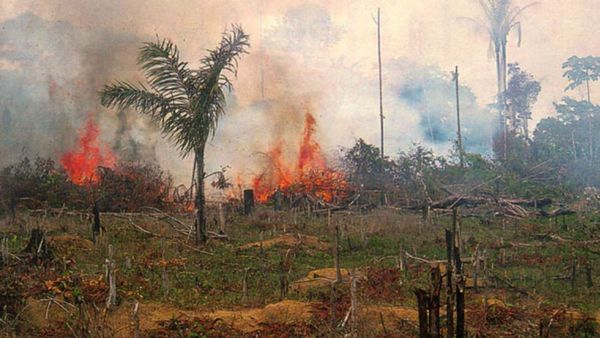
On the back of similar considerations, I have come to temper my optimism with respect to the many varieties of “nature escape” that are sometimes proposed as possible educational formats. Spending time in places devoted to more regenerative forms of dwelling, often based outside the city, is a laudable form of environmental education: it helps understand how ecological cycles function, particularly for audiences who might not have easy access to those. However, and this is where my tempered optimism comes from, it can mislead one into thinking that, for instance, cities are located outside of those very ecological cycles. Creation is not a museum, to be preserved in carefully curated reserves. It is the water you drink from your tap, inclusive of any fertilizers that seep into it; it is the desert-like heat at street level in the absence of urban greenery; it is the exhaust fumes that visit your lungs during your morning run; it is the burnt-out stumps from recurring forest fires.[5]
This is where climate education can find itself at sea. Everybody loves a pretty thing. But it takes a different kind of love to love a broken thing. The love I am talking about comes close to the love people tap into as they find ways of caring for an aging parent or a relative struggling with a chronic condition. It is akin to the love of Saint Joseph, balancing modesty and realism with the resolve to cooperate with the Creator in pulling beauty out of ugliness and opportunity out of degradation.[6] This love is at the heart of the Christian calling. In the apostolic exhortation Laudate Deum, which he wrote in the run-up to the COP conference, Pope Francis seems to accentuate the lucidity that love requires, in order to stare into the abyss of a growing instability in Earth system process.[7] At the same time, after the model of Saint Joseph, lucidity does not exclude an active role in caring for the flourishing of creation, preventing its further degradation.
These disparate impressions eventually gesture towards a culture of care for creation based upon love for a broken creation. A culture, that is, borne out of an aesthetic sensibility that does not reject the broken in favor of the idyllic or the utopian. One that resonates with the sensibility that Catholic writers like Flannery O’Connor, who have managed to conjure so powerfully, through harrowing and paradoxical styles, how the depths of God’s love are not indifferent to the farthest recesses of despair.
If my interpretation of the “mood” of the educational perimeter laid out by the Holy Father in Laudato Si’ is correct, this leaves us with a difficult question. Virtue requires examples, and examples are nurtured in community. Moreover, when the bonds of community are weakened and examples become few and far between, it is aesthetics that pulls ethical discernment by the bootstraps. This raises the question of what such an aesthetic might look like. As an educator, it can be difficult to come up with experiences that hit the right note, without falling back into the Scylla of the “information dump” and the Charybdis of the “nature escape.”
Faced with this conundrum, I want to risk collating some examples together, in the hope they might inspire you too. One of my favorites is the documentary film Liminal,[8] which was produced by fellow educator, Dr Zach Schrank of the University of Indiana at South Bend. Schrank was struggling to find a way to introduce his students to the planet’s predicament and humanity’s role in relation to it. So, he came up with drone footage of many iconic “landscapes of the Anthropocene” in his native Indiana. Liminal is the result. One can find in it veritable “monuments,” like the Gary steelworks near Chicago and the Empire quarry in Bloomington (from which the limestone of the Empire state building comes), alongside endless straight lines drawn by mechanized agriculture. The absence of voiceover, replaced by a meditative soundtrack, make this documentary feel like a post-industrial elegy. One is further drawn to meditate on the lives of the people who have dug those holes, fed those chimneys and plowed those straight lines, who only make cameo appearances at drone height—mostly as drivers of machinery.
Another format, which was brought to my attention by Sister Damien Marie Savino, whom I was graced to have as part of the audience of my talk at McGrath, is the practice of inviting students to write about their experiences of place. Writing combines a degree of privacy with a margin for creativity and self-expression—it nudges late teens outside of their comfort zone without creating the conditions for what might feel like over-exposure. Most importantly, it creates the conditions for the retrieval of impressions and experiences of place that most of us have without consciously knowing. An example of pedagogical use of writing is the “place history” of West Virginia coal landscapes penned by Olivia Okin, a student of Elizabeth Brite at Purdue University.[9] Okin reminisces on recurring moments of intimacy with a landscape marked by coal extraction over several generations of her family. Her tone, mixing memory, longing and an enduring sense of implication, deserves quoting—for it provides aesthetic form to what “lucidity” might look like:
[W]hen thinking of my intimate connection to West Virginia, my mind first goes to countless moments of driving through the mountains, moments where my eyes would follow the great black seams of coal from the viewpoint of my childhood car seat. There, I would press my finger to the window and trace the dark paths as they wiggled their way through the rock faces on either side of me. . . . [T]here was something that tugged at me to make contact with the natural world around me. Whether it was my ancestors who worked in the coal mines or my father who still works in coal-plant-cleanup, it is safe to say that West Virginia’s key resource is a part of me.
In closing, I want to reflect on my own experience of delivering the curriculum on “Ecological Transition and Sustainable Development” I mentioned earlier, mandated by the French Ministry of Higher Education and Research. In its inaugural year, my course (titled “Mapping bio-climatic issues”) will have to be delivered digitally, in order to reach all first-year undergraduates of the university (numbering over 2,000) to conform to the ministry’s target of “massifying” climate literacy by September 2024. The regulatory constraints I face as an educator (compulsory contents, massification) come into tension with the call contained in Laudato Si’ to go beyond the logic of the “information dump,” and to cultivate virtue and a sense of beauty within community. Still, this example is also worth sharing, because to be a “person of good will” means to try and make the most of the world we are handed down—which is not always the one we would wish for. So, here is a taste of my own medicine.
As I was preparing the course, colleagues faced me with hard questions: “How are you going to deal with students’ anxiety?”; “How are they going to relate all this information to their world and to the rest of their studies?”; “They’ve heard all of this a million times already!” Questions such as these have challenged me to come up with a format that would (within the ministerial constraints ) provide occasions for subjectivation, to counterbalance the objectifying logic of the “information dump” approach.
As a McLuhan scholar, I opted for the creation of an online media environment resembling a social network through the presence of a dynamically updated feed that students will access through their smartphones. A social network is a place where information spreads “acoustically.”[10] My students will access a feed of two- to five-minute-long excerpts of educational documentaries covering the required curriculum. The feed structure, however, will provide additional opportunities for participants to “make something” of those documentary excerpts. I am not referring solely to the possibility of discussion in the comments. In fact, a social network establishes a medium in which it is users that become the message. To catalyze this process, I count on gathering a smaller group of student moderators and co-facilitators who will produce their content (such as Q&A sessions with faculty members) and add it to the feed. My hope is that, by facilitating the production of such content, my educational contribution will be to help students come up with their own age-appropriate aesthetic of lucidity. Even in the absence of direct personal interaction, and with a constrained syllabus, the social network format can supply a form of community and help nurture examples of what an aesthetic of lucidity might look like to an eighteen-year-old.
All these examples help enlarge the “narrow path” between the information dump and the nature escape. It is this narrow path that I believe Pope Francis invites all educators of good will to tread in Laudato Si’. If, as a result of weighing up these examples, you feel slightly less disoriented in your own attempts to land somewhere in relation to the climate question, let this “slightly diminished disorientation” be the case I lay to rest for the power of examples in order to cultivate the virtue of lucidity in the face of a broken creation.[11]
[1] Campbell, C. (2023). ‘What do we talk about when we talk about climate change?’: meaningful environmental education, beyond the info dump. Journal of Philosophy of Education 57 (2): 457–477.
[2] French Ministry of Higher Education and Research (June 2023). Cadrage et préconisations du Ministère de l’Enseignement superieur et de la Recherche: Former à la transition écologique pour un développement soutenable les étudiants de 1er cycle [Framework and guidance of the Ministry of Higher Education and research: Educating Undergraduate Students to the Ecological Transition for Sustainable Development]. Available here.
[3] Paglia, E., and Isberg, E. (2024). “On Record: Political Temperature and the
Temporalities of Climate Change” in Anders Ekström and Staffan Bergwik (eds., Times of History, Times of Nature: Temporalization and the Limits of Modern Knowledge (pp. 259–283). Oxford: Berghahn.
[4] Pope Francis (2024). “Address of the Holy Father Francis to the Members of the ‘Guardians of Beauty’ Project” (30 September).
[5] Miller, V. (2022). “Tears and Ashes: Three Ways of Looking at Recent Wildfires in the West.” Commonweal (2 March).
[6] Pope Francis (2024). “Address of the Holy Father Francis to the Members of the ‘Guardians of Beauty’ Project” (30 September).
[7] Pope Francis (2023). Laudate Deum.
[8] Schrank, Z., and Yoder, A. (2023). Liminal: Indiana in the Anthropocene [Documentary film]. Indiana Humanities.
[9] Brite, E.B., Yeung, C., Pelnekar, S., Venkatraman, S., Okin, O. (2024). Refashioning Origins in the Anthropocene II: Facing Hyperobjects as Pedagogical Practice. Anthropocenes–Human, Inhuman, Posthuman 5(1).
[10] McLuhan, M, and McLuhan, E. (1988). Laws of Media: The New Science: Toronto: ON: University of Toronto Press.
[11] I am grateful to Sr. Damien Marie Savino, Julia Adeney Thomas, and Pierre Usclat for helpul suggestions and comments.